Makeup Brush Quality Control
Makeup Brush Quality Control Checklist for Private Label Brands
A specification-led inspection guide for private label teams reviewing makeup brush samples, components, assembly, branding, packaging and shipment readiness.
How to Use This Makeup Brush Quality Control Checklist
This makeup brush quality control checklist is designed for beauty brands, importers and sourcing teams reviewing approved samples, bulk production and pre-shipment inspection. It provides a practical framework for checking specifications, dimensions, bristles, ferrules, handles, assembly, branding and packaging against agreed project requirements.
A private label makeup brush combines a shaped bristle bundle, ferrule, adhesive, handle, surface finish, logo and retail pack. If any detail remains subjective, the approved sample may be interpreted differently during bulk production. Quality control therefore starts with a written specification explaining what was approved and how finished brushes will be checked.
This guide focuses on inspection criteria and records rather than broad manufacturer selection. For assortment planning, see our guide to planning a private label makeup brush line. For bristle material context, see our guide to comparing synthetic and natural makeup brush bristles. Buyers ready to compare physical formats can also explore makeup brush formats.
1. Freeze the Product Specification Before Bulk Production
Do not ask an inspector to decide what “premium,” “soft” or “close to the sample” means. Before production, issue a controlled specification with a revision number and approval date. It should identify the brush or set, intended use, component materials, dimensions, tolerances, colors, finishes, logo artwork, pack contents, labels and agreed test methods. Drawings are useful for dimensions and logo position; a physical reference is useful for shape, feel and appearance. Neither replaces the other.
A pre-production sample shows whether the proposed components and decoration can be assembled as intended. Once approved and identified in writing, an approved sample—often called a control or golden sample—becomes a comparison reference for production and inspection. The brand and manufacturer should record which sample is controlling, who holds it and what happens if a component or process changes. A photo alone cannot reliably capture density, feel, balance, surface texture or attachment strength.
Keep product and packaging versions linked. An approved product change should update the specification, sample status and artwork together so the pack still fits and describes the correct item.
2. Confirm Brush Type, Use and Dimensions
Start with the job the brush must perform. A foundation brush, highlighter brush and powder brush require different profiles and evaluation methods. Record the formula category, application area, desired coverage, edge softness and whether the item is a single brush or part of a set.
For each style, identify the dimensions that matter: total length, visible bristle length, head width and thickness, ferrule length and width, handle length and any set-specific size relationship. State where each dimension is measured and which tolerance applies. If balance or weight is commercially important, define the measurement method instead of relying on a subjective “luxury feel.” Useful physical references include a flat-top foundation brush, tapered highlighter brush and loose powder brush.
3. Inspect Bristles by Identity, Shape and Finished Bundle
Name the approved fiber or hair and any confirmed color blend, diameter mix or tip treatment. Labels such as vegan, plant-derived, hypoallergenic or antimicrobial should not be inferred from appearance; material or performance claims need evidence, a defined test method and target-market review.
Inspect the finished head against the approved sample and drawing:
- Shape and symmetry: compare the silhouette from the front, side and top; look for an uneven cut, flat spots, stray fibers or a twisted bundle.
- Density and distribution: confirm that the bundle feels and performs like the approved reference, without obvious gaps, hard knots or inconsistent fill across a set.
- Feel and recovery: use the same handling or formula test for each sample. Record the method, conditioning and result rather than using “soft” as the only criterion.
- Cleanliness and appearance: check for visible contamination, unexpected color variation, damaged tips, trapped fibers around the ferrule and residue from processing.
- Shedding performance: agree on a repeatable pull, comb, wipe, wash or application method and the acceptance rule for that project. Do not convert a limited sample result into a zero-shedding guarantee.
4. Check Ferrule Construction, Finish and Attachment
The ferrule shapes the head and connects it to the handle. Specify the approved material and surface direction instead of identifying a metal grade from color alone. Inspect width, length, profile, orientation, dents, scratches, finish variation, sharp edges, seams and deformation.
Crimping and adhesive work together, so look for an uneven crimp, rotation, gaps or an off-axis head. Where required, document a manual or instrumented attachment method and pass criteria. BlendCraft does not publish a universal pull-force value because brush constructions differ.
5. Review Handles, Coatings, Logos and Final Assembly
For the handle, record material, length, profile, finish, approved color reference and the viewing conditions used for color comparison. Inspect for chips, scratches, dust under coating, runs, orange peel, uneven gloss, rough edges, deformation and color mismatch. A wooden-look finish, metallic coating and molded handle may need different appearance criteria.
Logo approval should include the final artwork version, decoration method, color reference, orientation, distance from a defined edge, printable area and an agreed position tolerance. Compare clarity, fill, edge quality and adhesion using the written method selected for the project. The brand should approve the logo on the actual handle and finish; artwork on a screen does not predict how fine lines, metallic colors or small type will reproduce.
Inspect final assembly from multiple angles for visible adhesive, unexpected odor, loose parts, a rotating ferrule, crooked head, uneven gaps or inconsistent set orientation. Write any odor criteria and conditioning time; target-market chemical requirements need defined review or testing, not an informal smell claim.
6. Use Inspection Gates, Not Only a Final Check
A final inspection can identify finished defects, but it cannot always correct a wrong component or an approved artwork error. Divide the quality plan into practical gates:
- Incoming materials: verify the identified bristle, ferrule, handle, coating or decoration inputs and packaging components against the specification, approved color references and required documents.
- In-process control: review shaping, trimming, bonding, crimping, alignment, coating, printing and set assembly at the stages where a deviation can still be corrected.
- Before packaging: check appearance, dimensions, attachment, head shape, logo and agreed functional methods before individual protection hides or compresses the brush.
- Pre-shipment inspection: verify finished workmanship, set contents, retail packaging, labels, barcodes, quantities, carton marks and the agreed sampling result against the current approved files.
At each gate, define who records the result, how nonconforming units are handled and whether work may proceed. Reports should identify the product or lot, date, sample quantity, defect count, disposition and supporting photos.
7. Inspect Packaging as Part of the Product
Individual protection should prevent the bristle head from being crushed, bent or contaminated without leaving avoidable marks. For brush sets, confirm the sequence, orientation, tray or pouch fit and count. Verify that caps, sleeves, tissue, inserts or retention points do not distort the approved head shape during normal packing and storage.
Retail inspection should compare the current artwork, color, text, label position, brand-supplied barcode data and pack contents. The brand must define and approve scan testing, legal copy and market labels. Check carton count, assortment, protection, marks and closure. Any drop, vibration, compression or environmental test needs a written method and pass criteria for that pack and route.
8. Define Defects and Sampling Before Inspection
Defect classification helps the inspector apply the same decision to the same problem. A critical defect may involve a potential safety issue or a product/label condition that makes shipment unacceptable. A major defect can affect intended use, assembly, saleability or the approved brand presentation. A minor defect is a smaller workmanship deviation that does not materially affect use but is still outside the approved standard. The project team must supply examples relevant to the exact brush and packaging; generic labels alone are not enough.
Sampling means inspecting a defined portion of a production lot using a written plan. It does not mean that every hidden issue is eliminated, and it should not be reduced to an unexplained AQL number. Before inspection, record the lot definition, sample selection method, sample size, defect classes, acceptance and rejection numbers, test methods, handling of failed results and whether rework or re-inspection is permitted. BlendCraft does not claim one fixed AQL level for every project; the buyer and manufacturer should confirm the plan according to product risk, market, retailer requirements and contract.
Printable Makeup Brush QC Checklist
Copy this worksheet into the product specification or print it for sample and shipment reviews. Replace each general instruction with the approved value, method and tolerance for the exact brush or set.
| Item | Approved Specification | Check Method | Result | Remarks |
|---|---|---|---|---|
| Specification control | Product code, drawing, artwork and sample revision | Match all identifiers to the current approval record | □ Pass □ Hold □ Fail | ________________ |
| Brush type and use | Approved function and formula category | Compare label, brief and set composition | □ Pass □ Hold □ Fail | ________________ |
| Overall dimensions | Length, head width/thickness and stated tolerances | Measure at the defined points with agreed tools | □ Pass □ Hold □ Fail | ________________ |
| Bristle identity | Approved fiber/hair, blend and color | Document review plus comparison with approved sample | □ Pass □ Hold □ Fail | ________________ |
| Head shape | Profile, trim, symmetry and edge condition | Front, side and top visual comparison | □ Pass □ Hold □ Fail | ________________ |
| Density and feel | Approved reference and written evaluation criteria | Use the same handling or formula test | □ Pass □ Hold □ Fail | ________________ |
| Shedding performance | Project-specific acceptance rule | Agreed pull, comb, wipe, wash or application method | □ Pass □ Hold □ Fail | ________________ |
| Ferrule | Material, profile, dimensions and finish | Measure and inspect seams, edges, dents and surface | □ Pass □ Hold □ Fail | ________________ |
| Crimp and attachment | Approved crimp appearance, alignment and security | Visual check plus agreed attachment method | □ Pass □ Hold □ Fail | ________________ |
| Handle | Material, size, profile, balance and finish | Measure and compare with drawing/control sample | □ Pass □ Hold □ Fail | ________________ |
| Color and coating | Approved reference, gloss/texture and appearance limits | Compare under agreed viewing conditions | □ Pass □ Hold □ Fail | ________________ |
| Logo | Artwork, method, color, orientation and position tolerance | Measure position; inspect clarity and agreed adhesion method | □ Pass □ Hold □ Fail | ________________ |
| Assembly | Straight alignment, clean joints and no loose parts | Rotate and view from multiple angles; apply agreed checks | □ Pass □ Hold □ Fail | ________________ |
| Adhesive and odor | No unacceptable overflow; project-specific odor criteria | Visual review after stated conditioning period | □ Pass □ Hold □ Fail | ________________ |
| Set contents | Correct styles, count, order and color combination | Compare every sampled set with the pack specification | □ Pass □ Hold □ Fail | ________________ |
| Individual protection | Approved cap, sleeve, tissue, pouch or tray | Inspect fit and check for compressed or bent bristles | □ Pass □ Hold □ Fail | ________________ |
| Retail pack and barcode | Current artwork, labels, barcode data and placement | Visual comparison and scan check where required | □ Pass □ Hold □ Fail | ________________ |
| Shipping carton | Quantity, assortment, protection, marks and closure | Count, inspect and perform agreed transport test if specified | □ Pass □ Hold □ Fail | ________________ |
| Inspection record | Lot, sample plan, defect classes and disposition | Review completed report, evidence and approvals | □ Pass □ Hold □ Fail | ________________ |
Information to Send Before a Quotation or Sample
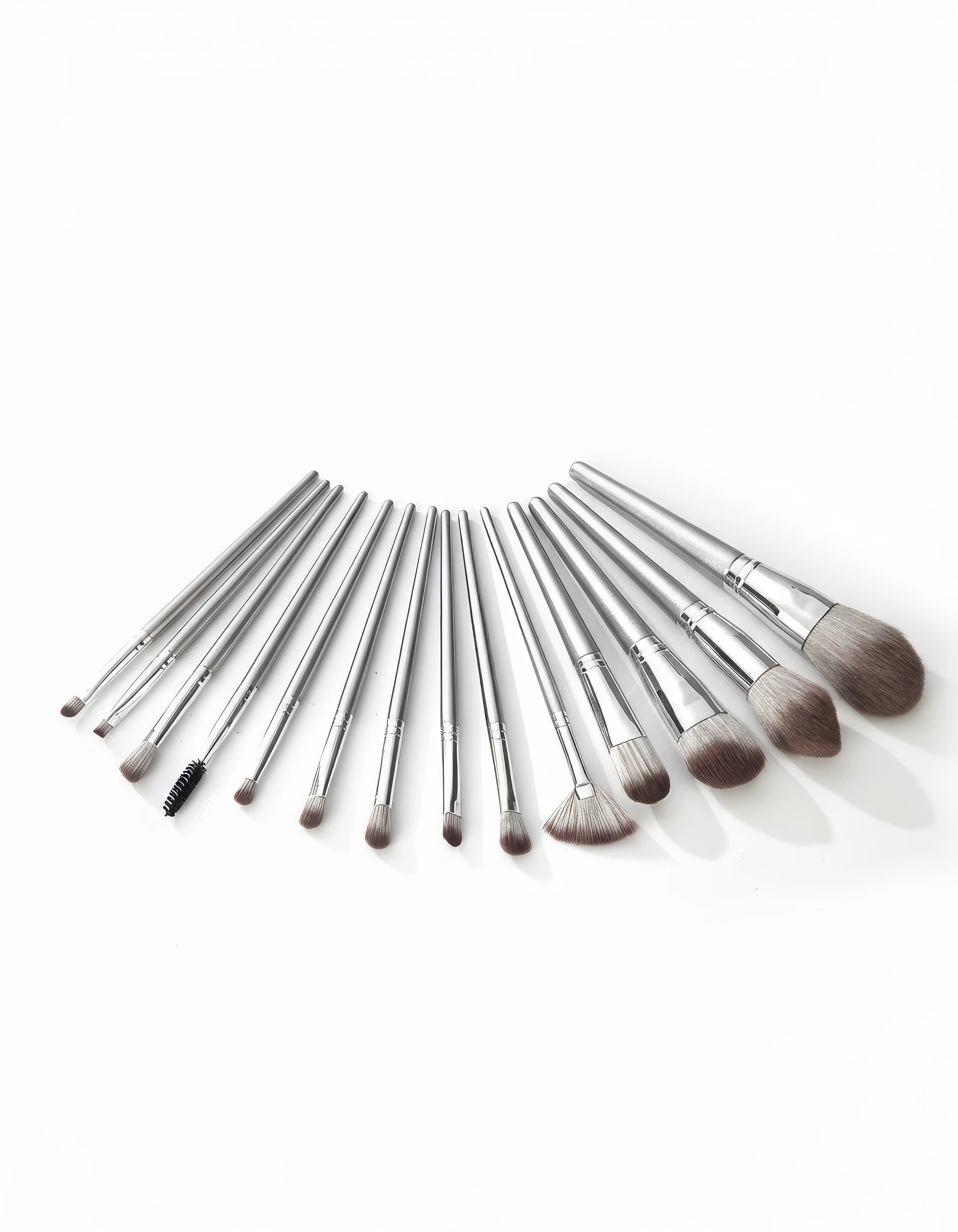
A useful request identifies the brush types or set, formula, user, references, target market, quantity, material or evidence needs, colors, finishes, logo, packaging and inspection scope. Include drawings, tolerances, retailer rules or third-party inspection needs before quotation. A 15-piece silver brush set can provide one assortment reference, while the OEM and private label process explains project review and approval.
Frequently Asked Questions
Is a golden sample enough to control production?
No. A retained approved sample is valuable for appearance, feel and assembly comparison, but it should be paired with a controlled written specification, drawings, tolerances, artwork and test methods. The record should identify which sample and document revision govern the order.
What should a brand check in the first makeup brush sample?
Confirm the brush’s intended use, head shape, bristle identity, density and feel, ferrule and handle construction, alignment, color, logo and packaging direction. Record requested changes precisely so the next sample can be compared against a clear revision.
Does BlendCraft use one fixed AQL for every brush order?
No universal AQL is stated. The sampling plan, defect classes, sample size, acceptance rules and inspection method should be agreed for the product, order, target market and buyer requirements before inspection.
How should shedding be evaluated without a zero-shedding claim?
Choose a repeatable method appropriate to the brush, such as an agreed pull, comb, wipe, wash or formula-application sequence. State the sample condition and acceptance rule, record the result and compare production with the approved reference. A limited inspection should not be promoted as an absolute lifetime guarantee.
Who approves logo color and placement?
The brand should supply and approve the final artwork, color reference, orientation and position tolerance. The manufacturer should confirm feasibility on the selected handle and finish, then retain the approved decorated sample or documented reference for inspection.
Can packaging inspection replace a transport test?
No. A packaging appearance check confirms contents, artwork and pack-out. If the distribution route or retailer requires drop, vibration, compression or environmental testing, the parties should define the separate method, sample condition and pass criteria for that project.
Discuss a Specification-Led Brush Project
If you are preparing a sample or bulk-order brief, share the product references, set composition, customization, packaging and inspection requirements for a scoped review. Product feasibility, sampling, commercial terms and timing are confirmed after the specification and estimated quantity have been reviewed.
Continue reading
Related Guides
Synthetic vs Natural Makeup Brush Bristles: A Buyer’s Guide
A practical buyer’s guide to synthetic and natural makeup brush bristles, including material differences, formula compatibility, sample testing and claim review.
Custom Makeup Brush MOQ: Per Style, Color and Set Explained
Learn how to read makeup brush minimum order quantities, calculate style and color combinations, and compare product and packaging requirements before ordering.
Makeup Brush Types & Uses for Building a Product Range
A practical guide to face, eye and detail makeup brush types, what each brush is used for, and how brands can compare roles when planning a product range.
How to Launch Your Private Label Makeup Brush Line
A practical guide to planning a private label makeup brush line, from assortment and specifications to samples, packaging, quality control and launch readiness.