Makeup Sponge Wholesale & Manufacturing Guide for Buyers
A practical B2B guide to makeup sponge shapes, material evidence, sample evaluation, customization, quality control, packaging and quotations.
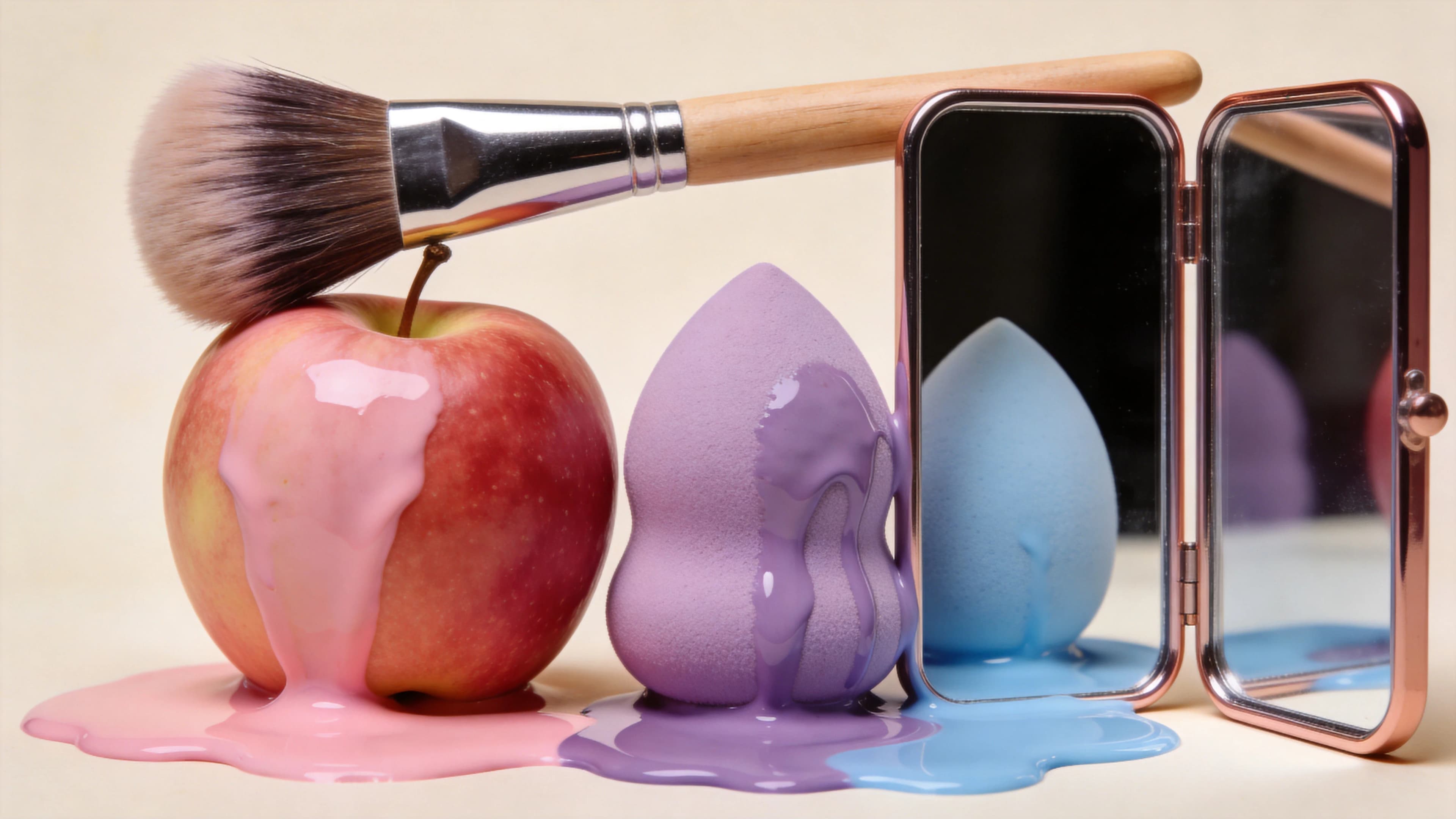
How to Source Makeup Sponges for a Wholesale or Private Label Project
A useful makeup sponge brief goes beyond “soft” and “good quality.” It should define the intended formula, application surfaces, wet or dry use, target user, retail position, pack format and target market. These inputs help a manufacturer compare shapes and samples without making assumptions about material or performance.
Start with the makeup sponge and powder puff collection. Compare the classic egg sponge, contoured gourd sponge, flat-edge makeup sponge and angled makeup sponge as four distinct shape directions for a project brief.
1. Choose the Shape Around the Application
- Egg profile: combines a rounded base with a pointed end in a familiar consumer format.
- Contoured profile: adds a narrower grip area and a differentiated retail silhouette.
- Flat-edge profile: provides a defined plane alongside rounded and pointed surfaces.
- Angled profile: adds a diagonal slant-cut face alongside the rounded body and tapered tip.
Document dimensions and key angles from a drawing or reference sample. If a new shape requires tooling, ask the supplier to separate tooling, sampling and production terms in the quotation.
2. Treat Material Language as a Claim That Needs Evidence
Terms such as hydrophilic, latex-free, plant-derived, biodegradable, antimicrobial and low-absorption are not interchangeable. Ask what the exact foam is, which component a claim applies to, what documentation is available and which test method supports the statement. Material and testing requirements should be confirmed for the target market before packaging copy is approved.
Evaluate physical samples for surface texture, odor, visible pores, color transfer, wet-use behavior, recovery and cleaning. A comparison is more useful when each supplier receives the same written method and the buyer records the result.
3. Build a Clear Customization Brief
- Shape, dimensions and application surfaces.
- Target color and acceptable production variation.
- Surface feel and wet or dry use expectations.
- Logo or decoration method, if technically suitable.
- Single, multi-piece, case, carton and labeling requirements.
Color should be approved against a physical sample, not described as a guaranteed digital match. Packaging also needs enough protection to reduce deformation and surface damage in storage and transit.
4. Use an Approved Sample and Repeatable QC Checklist
Retain an approved control sample and specification. During inspection, compare dimensions, shape, color, surface, visible defects, deformation, pack count, logo and packaging. If expansion, absorption, tearing or recovery matters to the product claim, define the method and acceptance criteria before production.
5. Compare Quotations on the Same Basis
MOQ, sample policy, tooling, production time and price depend on the selected shape, material, color, decoration, packaging and quantity. Request a written quotation for the exact configuration instead of relying on a general website number. Also confirm inspection, shipping terms and who supplies any market-specific documentation.
BlendCraft supports OEM, ODM and private label beauty-tool projects. Review the manufacturing process or send a makeup sponge project brief for a scoped discussion.
Frequently Asked Questions
Can BlendCraft confirm a latex-free or biodegradable claim?
The exact material and supporting documentation must be confirmed for the selected project before the claim is used.
Can we request a custom color and shape?
Both can be reviewed. The quotation should state whether the shape uses an existing format or new tooling, and color approval should use a physical reference.
Continue reading
Related Guides
Custom Makeup Brush MOQ: Per Style, Color and Set Explained
Learn how to read makeup brush minimum order quantities, calculate style and color combinations, and compare product and packaging requirements before ordering.
Makeup Brush Types & Uses for Building a Product Range
A practical guide to face, eye and detail makeup brush types, what each brush is used for, and how brands can compare roles when planning a product range.
Sourcing Premium Hairbrushes: A Practical B2B Guide
A practical guide to comparing hairbrush types, materials, samples, quality checks, and customization options for a wholesale or private label project.
How to Launch Your Private Label Makeup Brush Line
A practical guide to planning a private label makeup brush line, from assortment and specifications to samples, packaging, quality control and launch readiness.