Quality Control & Sample Evaluation
Hair Brush Quality Control Checklist for Buyers
A practical inspection guide for brands and sourcing teams reviewing pins, bristles, cushions, brush bodies, branding and packaging against an approved sample.
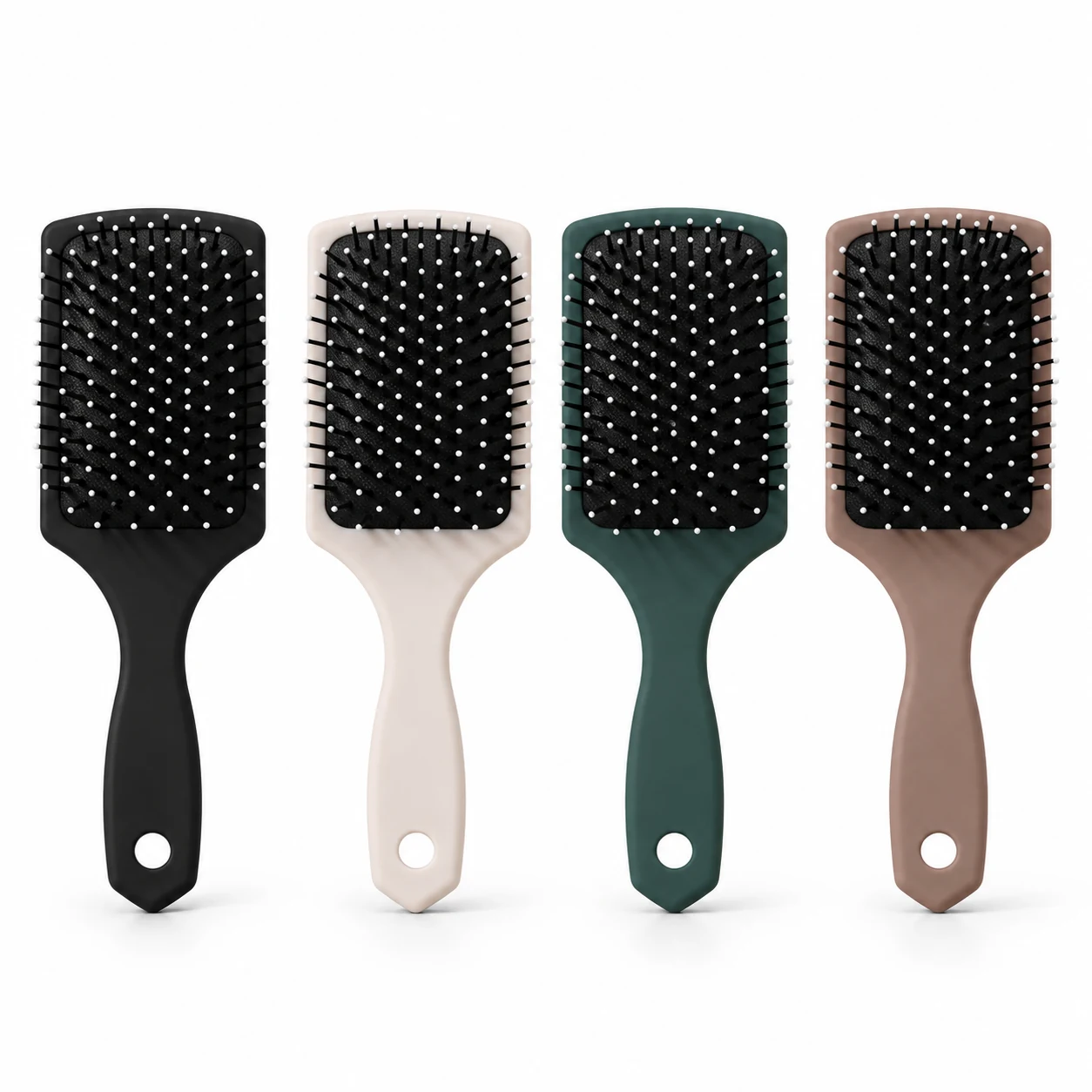
Rectangular paddle
Cushion head and rounded nylon pins
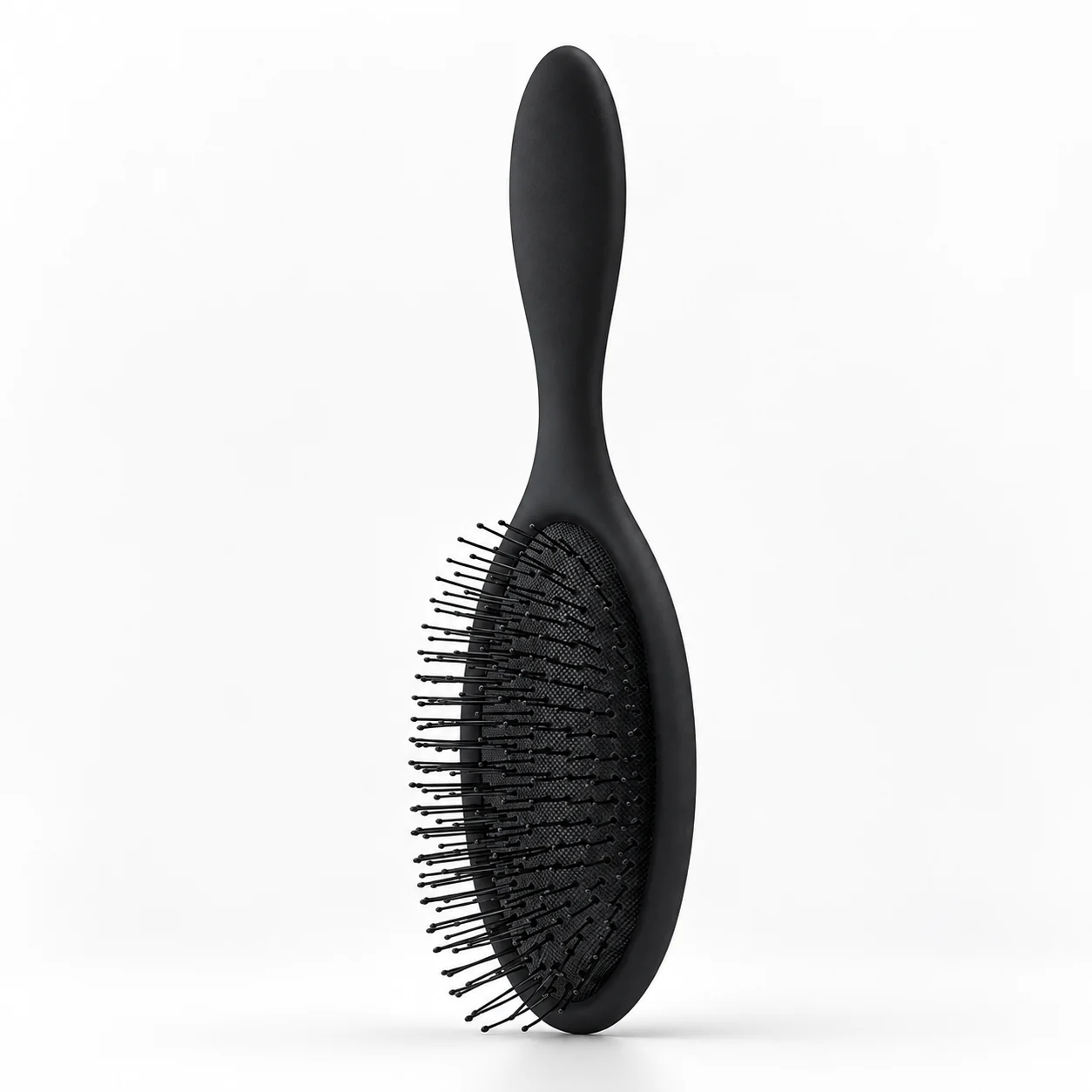
Oval cushion
Head shape and pin configuration
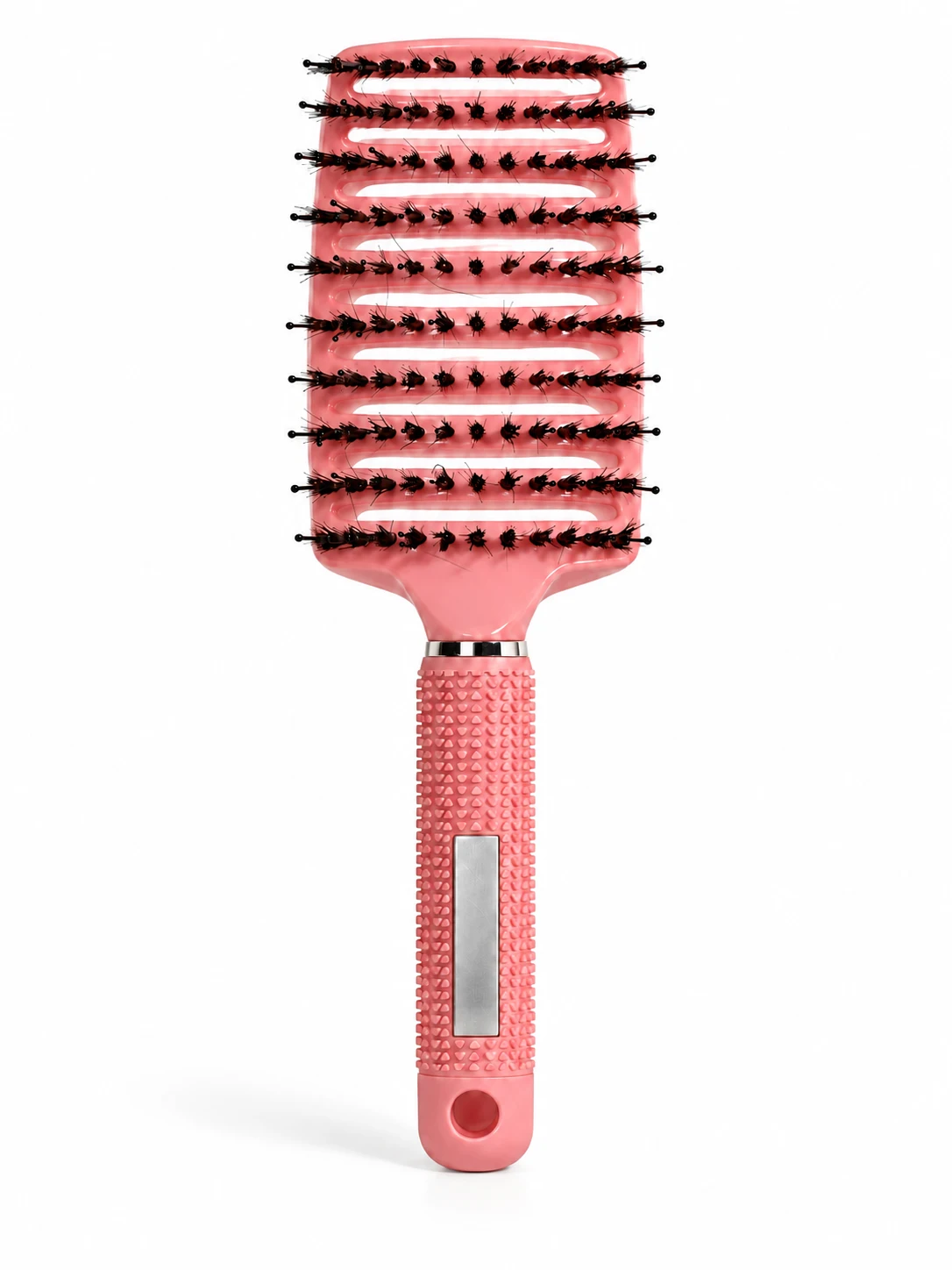
Curved vented
Longer pins and shorter bristle tufts
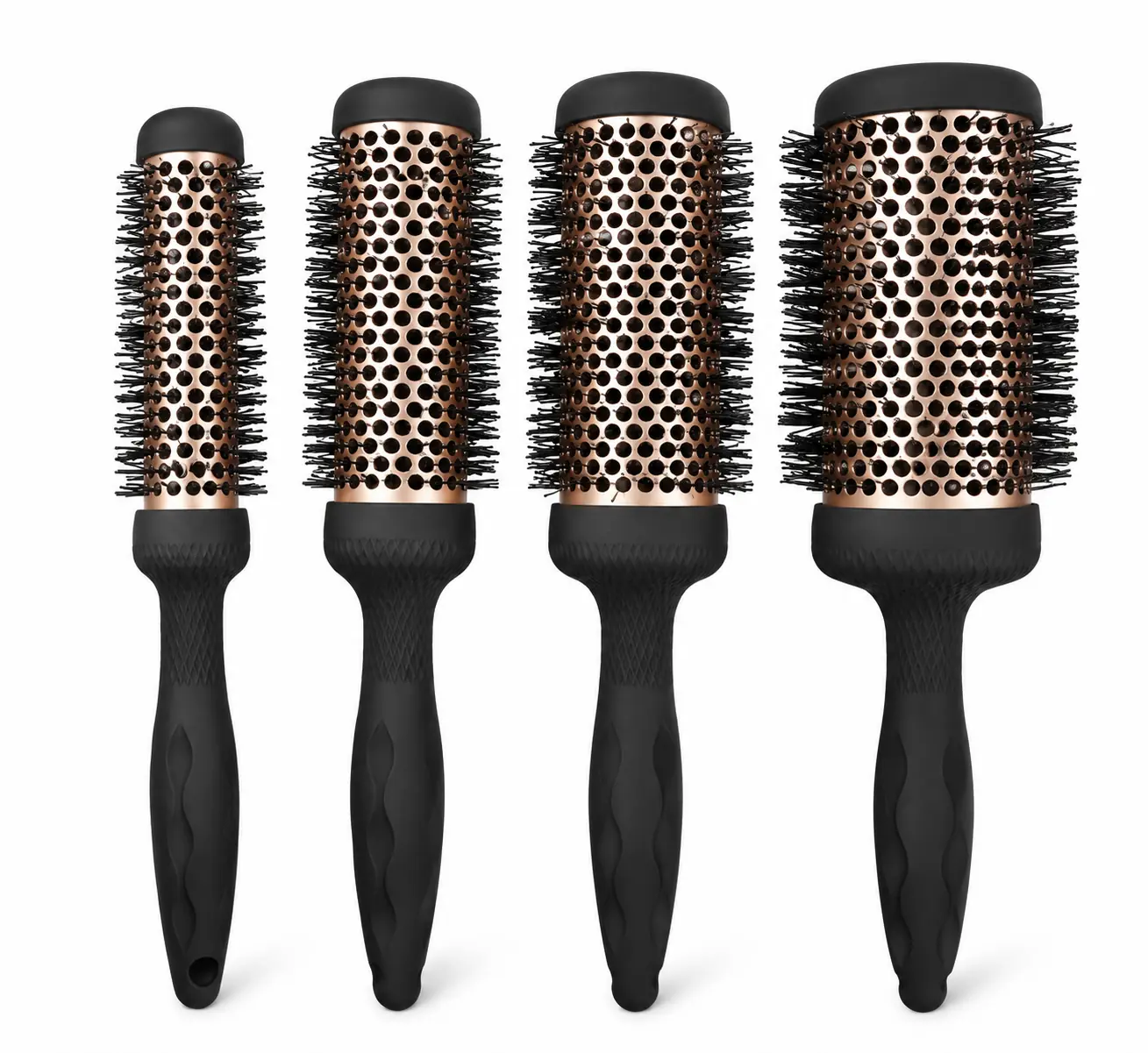
Round styling
Barrel and bristle measurement references
Hair brush quality control starts with a defined product, an identified approved sample and agreed inspection conditions. Buyers should check the correct pin or bristle configuration, dimensions, assembly, surface finish, branding and packaging, then add the checks required by the brush structure.
A cushion paddle brush, mixed-bristle vented brush and round styling brush need different inspection points. The checklist below helps you specify those differences, record observations and decide what needs correction before approving production or shipment.
Match the checklist to the brush construction
Choose checks from the brush’s actual construction: pin or bristle layout, cushion, molded body, barrel and connections. A paddle brush can also have a cushion, and a round brush can be vented. Map those features to the approved specification so each unit is inspected against the design that was ordered.
| Construction | Prioritize these checks | Reference to approve |
|---|---|---|
| Cushion paddle or oval brush | Pin layout and tips, cushion seating, response, head-to-handle assembly | Pin layout, cushion profile and an identified physical sample |
| Vented pin or mixed-bristle brush | Pin and tuft configuration, vent edges, molded ribs, head shape | Front and rear views, material specification and intended configuration |
| Round styling brush | Barrel and bristle dimensions, tuft distribution, vent finish, handle connection | Measurement drawing, size identification and agreed dryer-use requirements |
| Molded wide-tooth comb | Tooth profile and spacing, tips, edges, straightness and handle | Drawing or defined measurement points and approved sample |
This guide covers manual tools. Powered hot-air brushes require a different evaluation scope. Silicone shampoo brushes also need construction-specific criteria beyond this checklist.
For model-level construction and product references, review the hair brush and comb collection.
For the wider sourcing process, use the hairbrush sourcing guide. Here, the focus is how to inspect and document the selected product.
Freeze the specification before reviewing quality
Use a dated specification, an identified physical sample and approved artwork to define the inspection reference. Record the ordered configuration, dimensions, materials, intended use and packing. Keep unresolved requirements visible until they are agreed, and update the approval record when a component, method or design changes.
Before sample approval, identify:
- Model, configuration, color and intended use.
- Body, cushion, pin and bristle materials.
- Dimensions, measurement points and agreed tolerances.
- Pin or tuft layout, including any intentional openings.
- Color and finish references for each component.
- Logo artwork, position, size and orientation.
- Individual pack, accessories, labels and carton quantities.
- Functional checks, conditions and acceptance criteria.
A photograph helps identify a feature; it does not fully define cushion feel, connection security or brushing behavior. Keep the written specification and physical reference together.
Give the approved sample a version and approval date. If material, components, artwork or packing changes, record which approvals need updating. A change accepted in a message should also enter the controlled product record.
Configuration example: identical shape does not mean identical specification
BlendCraft’s BLC-04 oval cushion brush lists pin-only, natural-boar-mix and synthetic-mix options. The correct head shape and color do not establish that the short-bristle configuration is correct.
Identify the ordered version on the sample label and inspection sheet. Check material identity against the agreed documents; appearance alone is not a reliable way to establish composition.
Define dimensions before measuring them
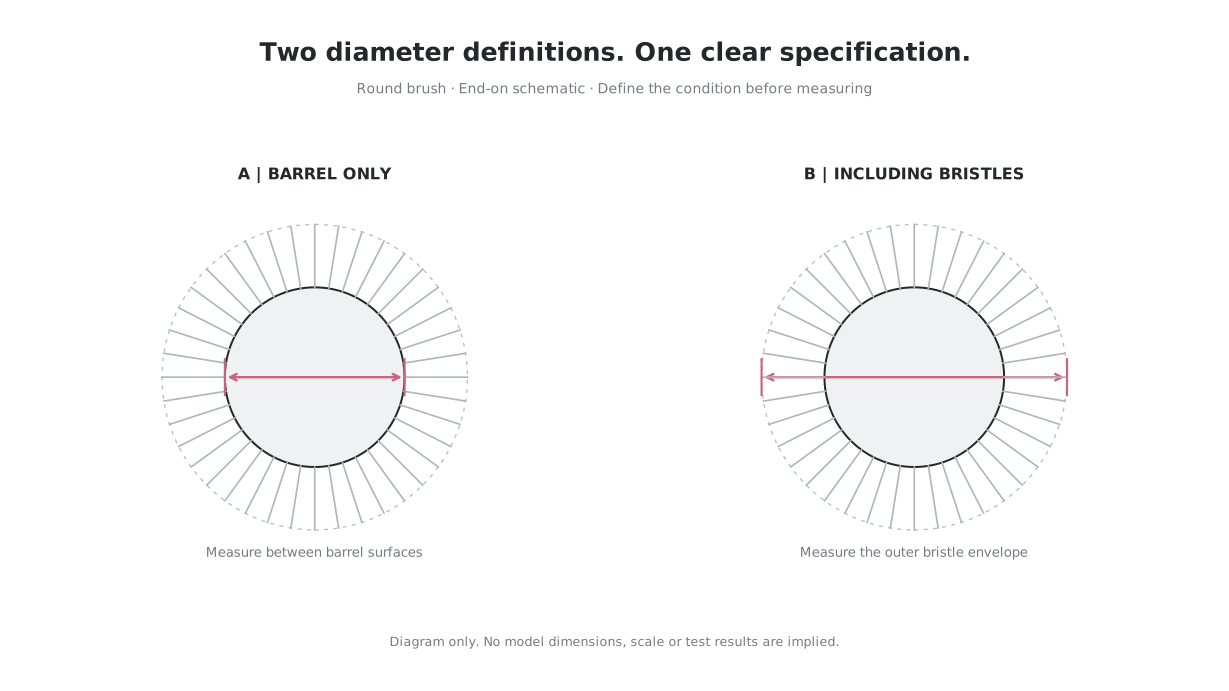
State the feature, endpoints, product condition, unit and tolerance for each measurement. For round brushes, distinguish barrel-only diameter from the outer diameter including bristles. Record measured results against that definition so two reviewers can compare the same feature without changing pressure or measuring points to obtain a preferred result.
| Feature | Define before inspection |
|---|---|
| Overall length | The two endpoints and whether projecting parts are included |
| Head width | The widest body dimension or another marked location |
| Pin or bristle projection | Starting surface, measuring position and whether the cushion is loaded |
| Cushion profile | Unloaded condition and the reference surface |
| Round-brush diameter | Barrel-only diameter or the outer diameter including bristles |
| Weight | Bare product or packed unit, and included accessories |
For a round brush, a nominal size is not enough. On BlendCraft’s round blow dry brush, the published 4–7 cm options follow supplied size labels and are not verified barrel-only diameters. A comparison brief should distinguish the barrel from the outer bristle envelope.
Use a diagram or annotated photograph to show measurement points. Flexible bristles can give different readings when compressed, so define the condition rather than squeezing them until a desired dimension appears.
Keep the measured result and agreed tolerance in separate fields. A product-page dimension alone does not establish that tolerance.
Standards and methods you can reference
Select references by product scope, market and the feature being evaluated. Record the edition and applicable method, then identify the acceptance requirement separately. A product standard may prescribe limits as well as methods; a sampling standard determines a lot-inspection framework. Any adapted method needs a documented scope and agreed decision rule.
Product requirements and sampling references
| Reference | What the official source identifies | How to use it in a hair brush brief |
|---|---|---|
| IS 4584:2002 | BIS lists Brushes, hair — Specification, reviewed in 2023 | Obtain the full applicable text and confirm its scope and requirements before specifying compliance. A catalogue listing is not a test report. |
| ISO 2859-1:2026 | AQL-indexed sampling schemes for inspection by attributes | Specify the edition, lot, inspection level, sampling scheme, applicable switching rules and decision criteria. Define the product nonconformities separately. |
| ANSI/ASQ Z1.4-2003 (R2018) | An acceptance-sampling system for attributes inspection | Identify the selected system and plan in the order. Do not assume that naming an AQL alone supplies the sample size or every acceptance rule. |
An AQL is not a complete inspection instruction or permission to ship a fixed percentage of defective brushes. The configuration, lot size, chosen plan and definitions of nonconformity must be established together. Select one documented framework rather than mixing tables from different editions or treating ISO 2859-1:2026 and Z1.4 as automatically interchangeable. This guide does not reproduce standards tables or calculate a sampling plan.
Adjacent methods are not hair brush certification
ISO 20126:2022 concerns manual toothbrushes; its published contents include tuft retention testing. ASTM D7834-13(2024) concerns filling-material shedding from paint brushes. They address different products and evaluation purposes.
A technical team may assess whether an approach can be adapted to a hair brush, but must document the fixture, specimen, conditioning, action, measurement and interpretation. A modified procedure should be described as adapted, not reported as unqualified compliance with the original standard. This article does not establish that either is the most commonly used hair brush method.
Confirm applicable legal requirements first. Buyer-specific criteria can supplement them, but cannot waive mandatory obligations or change a standard’s requirements while retaining an unchanged compliance claim.
Keep material and market compliance in a separate review
Visual and functional QC does not establish chemical or market compliance. Review relevant REACH substance restrictions, US children’s-product classification and rules, and California Proposition 65 warning obligations according to the product, materials, intended users, exposure and destination. These are not interchangeable certificates or a universal test list.
Inspect pin tips, bristle tufts and their layout
Compare the inspected head with the approved pin and tuft layout, then record missing, damaged, misplaced or visibly different elements by location. Assess longer pins and shorter bristle layers separately when the design uses both. If retention matters, use a documented method with agreed equipment, loading and acceptance criteria.
Check for:
- Missing or misplaced elements relative to the approved layout.
- Broken, bent or visibly damaged pins.
- Inconsistent tip formation where rounded or ball-shaped tips are specified.
- Tufts with a visibly different profile, distribution or projection.
- Loose elements, visible adhesive or assembly residue.
- Unexpected contact between pins, body edges and adjacent components.
Use neutral descriptions. “Two pins tilted toward the handle at the lower-left edge” is more useful than “bad bristles.”
For a curved vented mixed-bristle brush, inspect the longer pins and shorter tufts as separate features. Uniform height across both is not the objective when the design intentionally uses two levels.
Retention needs a method, not an arbitrary pull
A casual hand pull can reveal a concern, but it does not establish a repeatable retention result. If retention is an order requirement, agree the element being tested, equipment, direction, loading procedure, repetitions and acceptance rule before inspection.
Keep tested units identifiable. Destructive or potentially damaging checks should use designated samples rather than products returned unnoticed to saleable stock.
Check cushion seating and response
Compare cushion position, perimeter, profile and response with the approved brush under consistent conditions. Check for lifting, trapped edges, tears and unintended deformation, and identify designed openings on the layout. Record a local difference precisely so the reviewer can distinguish assembly variation, damage and an intentional feature.
Look for lifting, trapped edges, tears, unintended deformation, visible gaps and differences between corresponding areas. Then compare response under the same handling conditions.
For an initial manual comparison, use corresponding locations, a consistent support position and the same agreed action. Record what you observe, such as a local area remaining depressed. If a numerical response or recovery requirement matters, define the apparatus, loading and timing separately.
An empty position may be a designed air hole
Do not automatically classify an empty-looking position as a missing pin. Some cushion brushes include an intentional air-release opening. For example, ghd explains this feature on its own paddle and oval dressing brushes.
That does not establish the design of every cushion brush. Confirm the hole’s location and form against the selected model’s approved layout. An unexplained absence, tear or irregular opening still needs review.
Review the body, handle and vented structure
Inspect the head, handle, perimeter, vents, barrel ends and relevant connections against the approved construction. Record cracks, unwanted molding flash, loose assembly, residue and differences in finish or form. Apply joint checks only where a joint exists, and document any required strength or repeated-use method separately.
For molded bodies, examine parting lines, edges, vent openings and ribs for unwanted flash, cracks, incomplete formation or differences from the approved reference. Distinguish an intended seam or texture from a defect using the agreed specification.
Record visible dirt, foreign material or an unusual odor together with the unit and unpacking condition. Appearance and smell alone do not establish material identity or substantiate product claims.
For a round brush, inspect the barrel ends, trim, vents and handle connection. For a one-piece molded brush, inspect the head-to-handle transition rather than inventing a joint that the design does not have.
If bending, connection strength or repeated-use behavior is specified, define the loading, support, cycles and acceptance criteria. “It feels strong” should not become an undocumented test result.
A molded comb needs a different focus. On a wide-tooth comb, tooth spacing, tips, inner edges and thickness are more relevant than cushion recovery or bristle retention.
Separate functional review from performance claims
A sample review can show how a brush behaves on an agreed hair reference under agreed conditions. Record that result as an observation linked to the setup and unit. Claims such as heat resistance, anti-static performance or no breakage need their own suitable test methods and acceptance criteria before they can be substantiated.
If brushing behavior matters, agree the evaluation setup:
| Item | Record for a comparable review |
|---|---|
| Hair or tress reference | Type, source, length and relevant preparation |
| Condition | Dry or wet, including any conditioning or drying procedure |
| Action | Section size, direction, handling and agreed repetitions |
| Observation | Where resistance, catching or visible changes occurred |
| Comparison | Approved reference, inspected unit and recorded differences |
Record observations rather than turning an informal comparison into a universal claim.
For dryer-use requirements, specify the intended setup and test conditions. A vented shape, aluminum barrel or product name does not establish a temperature limit for every component. Agree the method for evaluating any heat-related claim.
Inspect color, logo and packaging together
Review the product and its approved pack as one configuration. Compare component colors, finish, artwork, logo placement, labels and quantities, then check whether packing alters the pins, bristles or cushion. Inspect the unpacked condition as well as the presentation so protection and identification are assessed together.
For logos, check artwork version, usable surface, size, orientation, placement and clarity. If durability is required, agree a suitable method and acceptance criterion; a quick improvised rub is not a complete durability specification.
Packaging is part of the inspection:
- Confirm the correct model, configuration, color and accessories.
- Check labels, barcode content and readability using the required verification method.
- Confirm individual, inner-pack and master-carton quantities.
- Check whether the pack presses on pins, flattens bristles or displaces the cushion.
- Compare the product after unpacking with its expected condition.
- Record the approved insert, bag, box or other protective structure.
BlendCraft’s rectangular paddle brush lists an ABS body, rounded nylon pins and an air-cushion head. Its standard unit pack is one brush per OPP bag. A custom retail pack must be approved as its own packing configuration.
For an assortment, check identification and protection across every selected format. A box that fits the outer dimensions may still apply pressure to the working surface.
Record defects so the result can be acted on
Record each finding against a unit, location, requirement and evidence reference. Keep the number of observations separate from the number of units with defects, then assign severity using the agreed classification. This makes the result traceable and gives the responsible team a defined basis for correction and reinspection.
| Observation | Record before deciding |
|---|---|
| Empty position in a cushion | Is an air hole approved at this exact location, or is a pin absent from the required layout? |
| Short-bristle layer differs | Which configuration was ordered, and what documents identify the inspected material? |
| Round brush appears oversized | Was barrel-only diameter compared with an overall bristle measurement? |
| Cushion edge is raised | Where, how much, under what condition, and compared with which approved reference? |
| Tips or tufts appear distorted | Was the difference present before packing, or observed after unpacking? Record both if available. |
| Surface or logo differs | Which component, artwork version, viewing condition and approved reference apply? |
Do not add individual defect observations together and report them as the number of defective units. One brush can have several observations. Record inspected units, units with defects and individual observations separately.
If a sampling plan is used, agree lot boundaries, selection, inspection quantity, defect categories, acceptance rules and treatment of failed lots before inspection. An approved sample defines the reference; it does not establish conformity of an entire shipment.
Agree critical, major and minor classifications
Use the following as a discussion framework, not a universal grading rule. The applicable requirements and documented inspection plan control the decision.
| Category | Definition principle | Action to define in the inspection plan |
|---|---|---|
| Critical | A condition judged to present an unacceptable safety risk or a serious applicable mandatory-requirement failure | Containment, escalation, review responsibility and release restrictions |
| Major | A departure likely to materially affect intended use, specified performance, correct configuration or saleability | Correction, affected scope, reinspection and acceptance decision |
| Minor | A departure from an agreed requirement with limited effect on intended use or presentation | Recording, correction or explicitly authorized concession |
Classify the actual finding, not just its short name. A mark, loose component or labeling difference can have different consequences depending on location, intended use and the applicable requirement. Record why the category was assigned; avoid deciding solely from a generic example photograph.
Use approval gates and a correction record
Make separate decisions for development feedback, pre-production approval and shipment release. At each stage, retain the reference versions, inspection scope, findings and responsible person. When a correction is proposed, identify the affected configuration or lot and record the recheck result before authorizing the next step.
| Stage | Purpose | Record to retain |
|---|---|---|
| Development sample | Identify differences and open specifications | Dated comments with measurements and marked images |
| Pre-production approval | Confirm the selected product and packing configuration | Approved sample ID, specification and artwork versions |
| In-process review, where agreed | Check relevant components and assembly before completion | Findings linked to the affected configuration and production scope |
| Pre-shipment inspection | Evaluate the defined lot against agreed requirements | Selection record, results, defects and disposition |
When an issue is found, identify the affected scope: model, color, configuration, lot and packing version. Record the proposed correction, responsible person, recheck method and decision. Keep an unapproved change from becoming the reference for the next review.
Approval of a corrected sample and release of a production lot are separate decisions. Document both where applicable.
Copy this hair brush QC checklist
Use the three-part record below to identify the order and reference versions, document applicable checks, and close out findings. Fill in the method and acceptance criterion before inspection. Mark a check not applicable only with a reason, and keep unit-level evidence connected to the final disposition.
Use this as an editable working sheet. Fill in methods and acceptance criteria before applying it to an order. “Not applicable” should identify why the check does not apply.
Open the editable, printable QC worksheet. The worksheet is a working copy; the article explains how to use the fields. Keep the completed inspection record with the order.
Inspection header
| Field | Record |
|---|---|
| Buyer / project / PO | ____________________ |
| Model / configuration / color | ____________________ |
| Supplier / production lot | ____________________ |
| Approved sample ID / date | ____________________ |
| Specification / artwork / packing versions | ____________________ |
| Inspection date / reviewer | ____________________ |
| Lot quantity / inspected quantity | ____________________ |
| Standard / edition / applicable clause or adapted method | ____________________ |
| Selection method / inspection conditions | ____________________ |
| Acceptance rules / agreed defect classification | ____________________ |
Check and result sheet
| Check | Requirement / method / acceptance criterion | Result / unit ID / evidence |
|---|---|---|
| Identity and configuration | Correct model, material configuration and color | ____________________ |
| Dimensions and weight | Defined measuring points, condition and tolerance | ____________________ |
| Pins and tips | Approved layout, tip form and visible condition | ____________________ |
| Bristle tufts, if present | Correct configuration, profile and distribution | ____________________ |
| Retention, if required | Agreed equipment, loading and acceptance rule | ____________________ |
| Cushion, if present | Seating, profile, response and designed openings | ____________________ |
| Body, handle and connections | Edges, molding, assembly and agreed function checks | ____________________ |
| Round barrel or molded teeth | Applicable dimensions, arrangement and edge condition | ____________________ |
| Color and finish | Component references and viewing conditions | ____________________ |
| Logo | Artwork, location, orientation, appearance and required durability method | ____________________ |
| Packing and identification | Protection, quantity, label/barcode and pack version | ____________________ |
| Intended-use requirements | Agreed functional or claim-specific methods and results | ____________________ |
Findings and disposition
| Field | Record |
|---|---|
| Units with defects / total observations | ____________________ |
| Finding ID / unit / location | ____________________ |
| Required condition / observed difference | ____________________ |
| Photo or measurement reference | ____________________ |
| Affected scope / action owner | ____________________ |
| Correction / recheck method and result | ____________________ |
| Decision / authorizer / date | ____________________ |
Frequently asked questions
Use these answers to resolve common inspection questions before setting up the review. The essential distinction is between an approved design feature, an observed difference and a requirement supported by a defined method. For an order decision, keep the answer connected to the selected configuration and agreed inspection plan.
What should a hair brush quality control checklist include?
Include product identity, dimensions, pins or bristles, construction, assembly, finish, logo, packing and relevant functional requirements. Add cushion checks for cushion brushes, barrel checks for round brushes and tooth checks for molded combs. Link every applicable result to the approved specification and sample.
Is a missing pin always a defect?
No. A designed air hole can resemble an empty pin position on some cushion brushes. Verify its location against the approved layout. An unapproved missing element or damaged opening requires separate review.
Can brushing a sample by hand prove its quality?
It can contribute observations, but it cannot replace defined requirements. Consistent comparisons need the same reference material, preparation, action and recording conditions. Retention, durability and heat-related requirements need their own agreed methods.
Does a “50 mm” round brush always have a 50 mm barrel?
Do not assume so. Confirm whether the label describes the barrel or the outer diameter including bristles, then define the measuring points and condition. Use the selected product’s drawing or confirmed specification.
Which standards can a buyer reference for inspection?
Choose the reference by scope. IS 4584 concerns hair brushes; ISO 2859-1 and ANSI/ASQ Z1.4 concern attributes sampling. Toothbrush or paintbrush methods are adjacent references only when a suitable adaptation is documented. Confirm the edition, applicable requirements and decision criteria before claiming compliance.
Does an AQL tell me which brush defects are acceptable?
An AQL does not define the brush’s required configuration, functional criteria or defect descriptions. Specify those separately, then select and apply the sampling framework and acceptance rules. Mandatory requirements still apply; an agreed sampling outcome does not waive them.
Should all hair brushes use the same acceptance limits?
No. Structure, materials, intended use and buyer requirements differ. Agree applicable methods, tolerances, sampling and acceptance rules for the particular configuration before production.
Prepare a hair brush sample or inspection brief
Prepare a brief that identifies the brush construction, ordered configuration, quantities, target market, approved references and required checks. Include artwork and packing details, and mark decisions that remain open. These inputs give the sample review and quotation a clear scope before production and inspection arrangements are confirmed.
Discuss your hair brush specification with BlendCraft.
For other manual beauty tools, the makeup brush QC checklist, eyelash curler sourcing and QC guide and makeup mirror sourcing and QC guide cover their own construction-specific checks.
Continue reading
Related Guides
Sourcing Premium Hairbrushes: A Practical B2B Guide
A practical guide to comparing hairbrush types, materials, samples, quality checks, and customization options for a wholesale or private label project.
Makeup Brush Quality Control Checklist for Private Label Brands
A specification-led inspection guide for private label teams reviewing makeup brush samples, components, assembly, branding, packaging and shipment readiness.
Eyelash Curler Quality Control: A Practical Sourcing Guide
For brands and retail buyers comparing mechanical eyelash curlers: learn what to check in a sample, how to record defects, and which specifications to agree before production.
Makeup Mirror Sourcing & Quality Control Guide
A buyer-focused guide to makeup mirror formats, reflection quality, frame and hinge checks, protective packaging, sample approval and production QC.