Stock vs. Custom Samples for Private Label Beauty Tools
Choose the sample, proof or mock-up that answers your next private label sourcing decision.
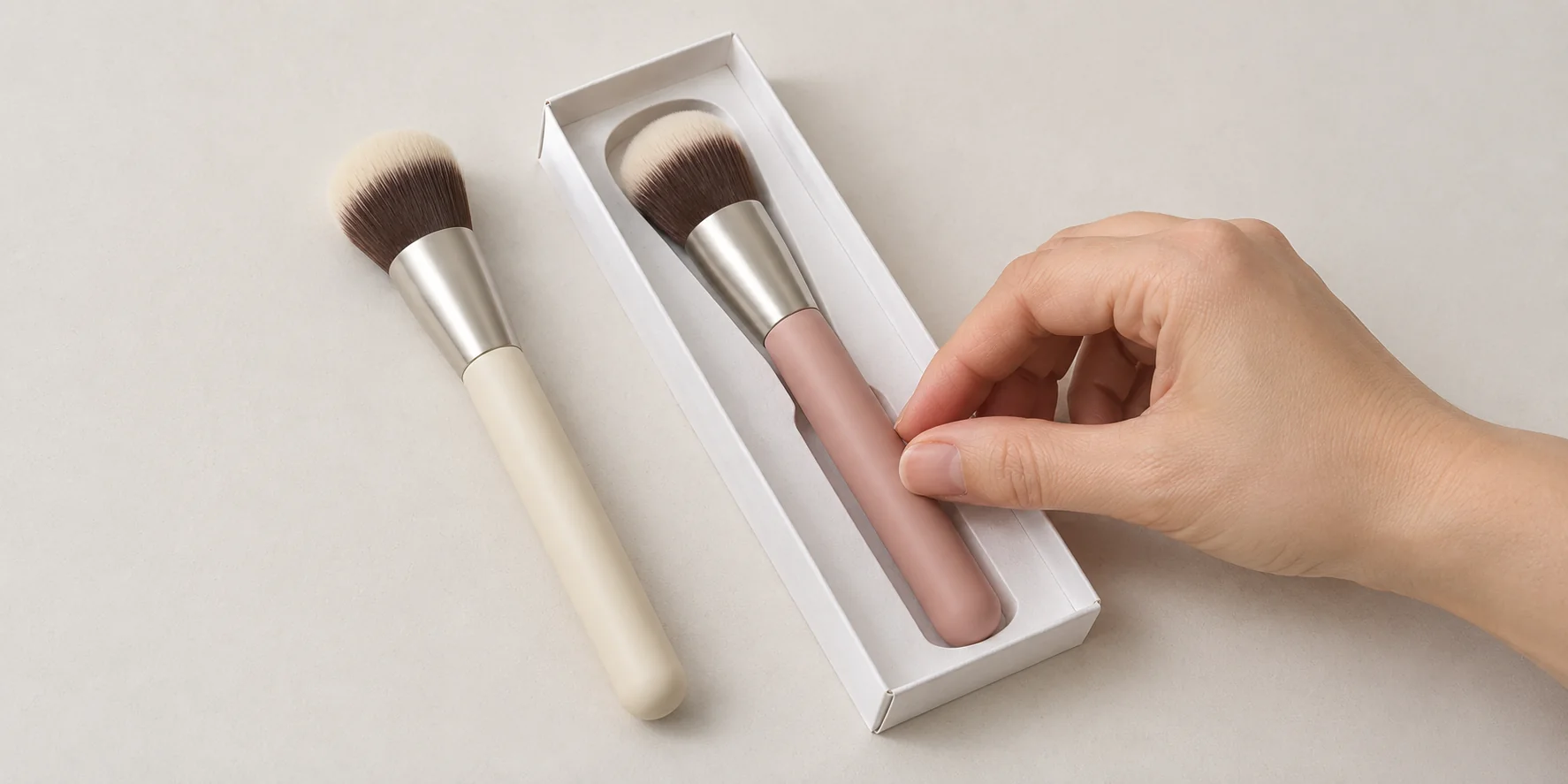
Use a stock sample to evaluate an existing model. Request a physical component proof when the change is confined to one part, such as a wordmark on a proven brush handle. If the change affects application, assembly or packaging fit, request a sample that includes the affected parts together. Before bulk production, tie approval to the actual sample, the written specification and the features you checked.
Say what you need to decide before asking for a quote. “Can we remove this brush from the new paperboard insert without catching its bristles?” calls for an assembled brush and a physical insert. “Is the logo centered on the handle?” may only need a printed handle. A focused request gives the supplier a clear deliverable and gives your team a specific result to review.
Stock vs. custom samples at a glance
Use this table once you have a supplier and a starting model or drawing. If you are still comparing offers, start with the first guide in the series. How to choose a makeup brush supplier
| What do you need to decide? | What to request | What the evidence can cover |
|---|---|---|
| Does an existing tool suit our range? | Stock sample with its model ID and a list of differences from the proposed order. | Size, handling and performance of the sample you receive. Carry forward checks for features the supplier confirms will use the same specification and conditions. |
| Does a logo, color or finish work on one part? | Physical component proof made on the intended material and finish. Use the actual curved or shaped part when placement matters. | Appearance of that part. Evaluate the assembled combination when adjacent parts or fit affect the decision. |
| Will a changed brush head, puff or mechanism work? | Functional custom sample with the affected parts assembled. Ask which materials or processes represent production and where the sample uses substitutes. | The behavior of the features represented in the sample during the agreed use check. Keep decisions about substituted features open. |
| Does the tool fit and come out of its retail package properly? | Physical packaging mock-up loaded with the intended tool or a representative assembled sample. Specify the insert material and how it locates the tool. | Fit, removal, closure and obvious contact points in the combination tested. |
| Is the packaging artwork correct? | PDF proof for copy, orientation and positioning on the dieline. Request a physical proof if print color or surface finish affects approval. | Layout on the identified artwork revision. A physical proof adds evidence about the board, inks and finishes it actually uses. |
| Is this configuration ready to serve as the production reference? | Pre-production sample for the agreed configuration, with its ID, specification and packaging revisions, plus a list of any deviations. | Features represented in the sample and approved in writing. Set separate checks for bulk production and distribution where the project calls for them. |
A stock sample is an example of an existing model. A custom sample is made or modified for your brief. A pre-production sample is reviewed against the intended configuration before the bulk run. Specify the item, process and decision in your request. QIMA describes prototype and pre-production reviews as distinct stages. Packaging prototyping services offer digital mock-ups, physical structures and printed proofs for different decisions. QIMA sample review stages · Examples of packaging prototypes and proofs
What can you approve from a stock sample?
Label the sample you tested with the supplier’s model code or drawing revision and your own sample ID. Ask the supplier to attach a short list of what matches the proposed order, what will change and what is still open. A model code alone gives you a starting reference. The list tells you which checks you can carry forward.
For example, you can carry forward your assessment of a foundation brush’s application when the supplier confirms that the proposed order uses the same head profile, fiber, density and assembly, and your team is evaluating it with the same foundation formula and method. If the supplier later substitutes fiber or changes the head profile, reopen the application check. Keep earlier decisions about unrelated features if the supplier confirms their specifications still apply.
When the prototype uses a substitute material or a provisional process, record that difference next to the feature you checked. A provisional handle of the intended geometry may answer whether the brush is comfortable to hold. If the final handle uses a different material or coating, finish and grip still need evidence on that surface.
When do you need a custom makeup brush sample?
Logo, color or finish. If the wordmark is the only change to the brush, request a printed handle with the intended diameter, material, coating and print method. A flat swatch can help narrow the color direction. A curved handle shows whether the wordmark reads clearly and sits where you wanted it. Where durability matters, agree on the physical test and acceptance criterion for the actual surface. For a coordinated handle and ferrule finish, review the physical parts together under agreed lighting. Makeup brush logo printing guide
Function or assembly. Ask for an assembled sample if the change touches fiber, head shape, density or the way the parts join. Give the supplier a short description of the intended use. For example, ask for a brush you can compare with the current sample when spreading your chosen liquid foundation. Record the formula, sample IDs and the results you care about, such as whether the head reaches the intended area and how evenly it lays down the product. Use the same method across both samples. Makeup brush quality control checklist
Packaging fit. Ask for the proposed insert and carton to be tried with a brush that represents their contact points and overall envelope. Observe where the insert grips the brush, how the tool is removed and whether the carton closes with the brush seated properly. Review artwork on the matching dieline revision. If you also need evidence of transit protection, define that separately for the packed product and its intended distribution route. Makeup brush packaging guide · ISTA guidance on distribution and testing
Request independent proofs in parallel when the relevant specifications are already set. If the brush dimensions are still changing, settle the geometry that determines the fit before paying for a final fitted insert. The same logic applies to a powder puff. A physical proof on the intended fabric can show the look of a strap logo. A revised strap width calls for checking grip and retail pack fit on the completed puff.
When should you request a pre-production sample?
Ask for one when your approval depends on the final combination of parts, decoration and retail packaging, especially if earlier rounds used substitute components or assessed features in isolation. Ask the supplier to state the materials and processes used in the sample, including any that differ from the intended run. Assign a check and an owner to each item that stays open.
A pre-production sample describes a stage in the project. An approved sample describes a decision your team has recorded and agreed with the supplier. Both parties should be able to identify the approved physical reference and the written specification it represents. Some suppliers schedule this sample after order placement. Agree the timing and the action that approval authorizes before you commit to the next step. Example of a supplier’s post-order sample process
Record the physical sample ID, product specification revision, artwork and packaging revisions, approval date, reviewer and approved features. Include any deviations, open items and the decision that remains on hold. If a supplier suggests a substitution later, you can trace which tests or approvals depend on it. Arrange checks against the agreed reference during production or inspection as appropriate to the order. Once the production order is ready to review, use the first-order deposit checklist to match those records to the pro forma invoice.
Worked example with a printed handle and fitted insert
Illustrative procurement scenario. A brand chooses a stock foundation brush, B1. It likes the application and wants its own wordmark on the existing handle, plus a paperboard insert inside a retail carton. It requests two physical proofs in parallel, a printed handle made on the specified lacquer finish and an unprinted insert I1 loaded with the B1 brush.
During review, the supplier proposes a wider metal ferrule. In this example, the width at the insert’s contact point changes from 16 mm to 18 mm, while the nominal opening in I1 is 17 mm. Those dimensions identify a fit question to resolve on the assembled sample. The fit decision still depends on how the board flexes, where it contacts the tool, and whether the brush can be removed without damage.
| Evidence on file | Decision after the ferrule changes |
|---|---|
| B1 application check with the intended foundation formula | Carry forward the application result once the supplier confirms the relevant head and assembly specifications still apply. If fastening or another change could affect application, repeat the relevant check on B2. Keep the decision open while changes are unconfirmed. |
| Printed handle proof H1 on the intended lacquer, artwork A1 | Carry forward the appearance approval if the supplier confirms that the handle geometry, lacquer, artwork placement and print method still match the proof. |
| Fit check with B1 in insert I1 | Reopen fit. Ask for assembled brush B2 loaded into the proposed insert. If I1 needs adjustment, check B2 in the revised I2 and record the paired versions. Check placement, removal, ferrule contact, bristle clearance and carton closure. |
| Carton PDF P1 | Keep the artwork layout approval within the dieline version represented by P1. If carton geometry or the dieline changes, request a revised proof. Final print appearance remains open until the relevant physical proof is reviewed. |
If B2 passes the physical fit check in the revised insert, record the decision against B2 and I2, along with the carton revision tested.
Copy-and-send sample request template
Subject — Sample request for [product, model and revision]
Hi [Name],
We’re reviewing [stock model or drawing ID] for a private label order. Our reference is [physical sample ID, drawing/spec revision and artwork revision]. This round needs to answer [one specific question].
Please confirm which features match the proposed order, which features you’ll change, and where the sample will use a substitute material or process. Could you send [physical items and quantities, plus any files]? We’ll review [feature] against [reference or agreed check].
Please confirm the sample fee, courier charge, what starts the lead time and when you expect to dispatch. Label the physical pieces and files with their matching revisions, and list anything that needs a later approval.
Thanks,
[Name]
For the revised brush in the example, the key request could be “one assembled B2 brush in the proposed I2 insert, with the insert and outer carton revisions identified, so we can check brush placement and removal, bristle clearance and carton closure.”
Common questions about private label samples
Can one sample approve a whole range of colors?
One sample can establish a shape or construction shared by several variants if the supplier confirms the shared specification applies to each. Review each finish that requires its own approval on the intended material and process. If the handle and ferrule need to match across different materials, compare those parts together under agreed lighting.
Can photos or video replace a physical sample?
Use photos or video to review visible details such as logo placement or the steps for putting a tool in an insert. For measurements or a closure check, a team member or inspector with the physical item can verify the result and record it on a remote call. For hand feel and application on your own formula, arrange a physical sample for the person making that decision. QIMA remote sample approval
Can a digitally printed carton proof approve the production print?
Approve the properties that the proof actually represents. A printed prototype can show layout and overall appearance on the board supplied. If the planned production run uses different board, printing or finishing, agree what will serve as the appearance reference and what needs a further proof. Physical packaging proof options
If you’d like BlendCraft to review a sample request, share the model or drawing, the change you want and the decision the sample needs to support. Review your private label sample scope
Continue reading
Related Guides
What to Confirm Before Paying a Deposit for a Private Label Beauty Tools Order
Check your first beauty tools order against the approved sample, correct the pro forma invoice and agree what can start after the deposit.
How to Choose a Makeup Brush Supplier for Your First Private Label Order
Compare suppliers on the same first-order brief and decide which paid sample will answer your most important question.
Manicure Set Packaging Guide for Retail Buyers
Choose packaging for a manicure kit, then use the loaded-sample checklist to approve how it displays, holds tools and scans at checkout.
Eyelash Curler Packaging: How to Choose and Approve a Retail Pack
Choose a retail pack for a mechanical eyelash curler, verify the fit and spare-pad position, and record which sample you approved.